The Museum of Prague preserves and researches the cultural heritage of the Czech capital from its beginnings to the present day. The museum relies on precise and reliable technology to safeguard its extensive collections in the long term and make them digitally accessible. Professional ColorEdge monitors from EIZO play a key role here, enabling the true-to-original digitization of artworks and historical documents with the highest color accuracy.
ColorEdge Case Study
Museum of Prague
The Museum of Prague uses professional EIZO monitors in its digitization work for high color accuracy, constant image stability and a long service life.

The Museum of Prague
The museum manages several historical buildings throughout Prague, each of which offers unique exhibitions:
The Norbertov Study and Documentation Center houses an exhibition on the architect Adolf Loos, while an exhibition on Charles IV can be found in the house "U Zlatého prstenu".
The museum is also dedicated to scientific and research activities. It publishes the specialist journal "Studia Musei Pragensis".
It regularly organizes exhibitions, lectures, guided tours, educational programmes for schools and the public as well as thematic events - e.g. the International Archaeology Day, museum evenings or walks through historical districts.
The Museum of Prague received financial support from the National Reconstruction Plan, specifically from the component "Digitization of Cultural Property and National Cultural Monuments". This funding enabled the implementation of several important projects aimed at the protection, digitization and accessibility of collection objects.

Photo for the Museum of Prague: BoysPlayNice

Photo for the Museum of Prague: BoysPlayNice
Professional monitors from EIZO are an important part of the equipment used by the museum for its digitization work. These monitors are known for their high color accuracy, image stability and long service life.
Interview
We asked BcA. Jan Vrabec, head of the digitization department at the Museum of Prague, who works at the museum as a documentary photographer, to find out what the monitors are used for in the digitization process and why the museum chose the EIZO brand in particular.

Could you explain to us right at the beginning what exactly the digitization of cultural assets means and what the main goal is?
Jan Vrabec: The digitization of museum collections is an essential part of the professional care and protection of cultural heritage. It is the process of transferring physical objects and information about them into digital form. The result of the digitization process is several levels of digital representation of collection objects, from basic documentation to the creation of the final digital copies. A collection object thus receives its digital equivalent, often in different variants. The aim of digitization is primarily to protect the original objects from unnecessary handling and damaging influences and to make visual and descriptive information accessible afterwards.

Why are color accuracy and image quality important for digitization and what specific parameters and features led to the choice of EIZO monitors for the museum's digitization workstation?
Jan Vrabec: The most important aspects of digitizing museum collections include, for example, high resolution, colour fidelity and standardized, open formats for digital files and metadata. This is part of the primary digitization process. High-quality professional monitors with the option of hardware calibration and color management are essential for the subsequent processing of the digitized material. High-quality monitors are the ideal window to the entire digitization process. Everything we do when processing digital files is done by displaying them on the monitor. Our goal is to improve the fidelity of digitized objects and to see more than on a conventional monitor with limited color space and inaccurate display. Therefore, our goal was to purchase EIZO monitors with a wide color gamut, high resolution and integrated calibration probe.

Photo for the Museum of Prague: BoysPlayNice

Photo for the Museum of Prague: BoysPlayNice
What role do the automatic hardware calibration and long-term color stability of EIZO monitors play when working with works of art and historical documents?
Jan Vrabec: With a larger number of monitors in use at our workplace, the purchase of monitors with automatic hardware calibration has solved the complications of "manual" calibration with an external sensor. In this way, the monitor and its software, which simultaneously communicates and monitors the color management settings between the computer/editing program and the monitor itself, monitor everything according to the same settings.
Which specific EIZO monitor models do you use and which functions have proven to be the most important for you during digitization?
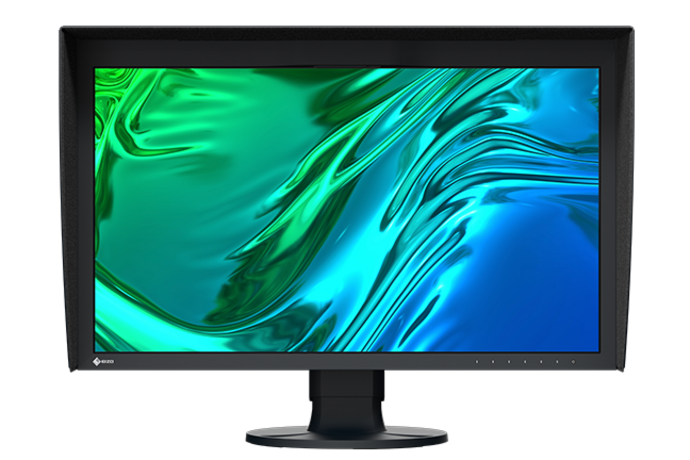
Jan Vrabec: As part of a National Reconstruction Plan project (digitization of cultural assets and national cultural monuments - 0442000016), we purchased professional EIZO CG2700X 27" Black monitors with an integrated sensor. What we appreciate most is the automatic calibration function using the integrated sensor. This eliminates a worry for us that would have multiplied with the larger number of monitors we use. Calibration takes place once a preset interval has been reached, and calibration can be carried out at any time if required. It is also possible to conveniently switch between color profiles, for example for comparison purposes.

Photo for the Museum of Prague: BoysPlayNice

Photo for the Museum of Prague: BoysPlayNice
How do you rate the ergonomics and reliability of the EIZO monitors in daily operation within the digitization team?
Jan Vrabec: We have been using EIZO monitors for more than two decades. It started with CRT monitors, followed by several generations of LCD monitors up to today's powerful, practical and precise models. We appreciate their automatic recalibration, convenient and easy adjustment and the possibility of uncomplicated connection. The image signal, data and power supply can be transferred via a USB-C cable.
Did you also consider other monitor brands? What tipped the scales in favor of EIZO during the tender or testing?
Jan Vrabec: We did not consider any other brands as we have had very good and problem-free experiences with them for many years. But also because of case studies from other similar institutions dealing with the digitization of cultural heritage. In more than 20 years of using the EIZO brand, we have never encountered a major problem. We have never had to worry about warranty or post-warranty service. Many older monitors are still in use in other departments, where they have replaced inferior office equipment. Our aim is to gradually pass these high-quality monitors on to other colleagues in the museum so that they too can view the digitized images with the closest possible match to the original on display.
About the Museum of Prague

The Prague Museum (formerly known as the Museum of the Capital City of Prague) is an important cultural institution with extensive collections documenting cultural, historical and everyday life in Prague from the earliest times to the present day. It was founded on October 3, 1881 and its main building in Florenc was officially opened in 1900. In 2024, the museum was renamed and received the new name - Museum of Prague.
4K UHD